ÃéΓ�ΓΓΓ§ äåò
ôï ΓΓ�Γ― Γ�Γ΅ΓΓ―Γéóìü F4 2009 áðü ôï site ôçò FAI.
Åýëïãç Γ§ áðïñΓ�Γ΅ Γ³Γ―Γµ, Γ§ äéáöïñΓ� Γ¥Γ�Γáé óôï Γ½ΓΈΓ―Γ²,
Γ§ ðñïáéñåôéΓ�Γ� Γ�Γ³Γ�çóç (ôï ãñΓ�öåé Γ�áé óôá åëëçΓΓ©Γ�Γ�) Γ�÷åé Γ½
ΓΈΓ―Γ² ðôΓ�óçò Γ�ΓΉΓ² ôï ðïëý 6m, äçëáäΓ� óôçà ïõóΓ�Γ΅ Γ¥Γ�Γáé
÷áìçëü ð�ñáóìá.
Γ�ðü ôïà ΓΓ�Γ― Γ�Γ΅ΓΓ―Γéóìü 2009
6C.3.6.2. Straight Flight:
Model aircraft should make a straight and level flight of at least 100 metres length centred on the judges’ position.

Errors:
1. Not a straight course (slight corrections are acceptable with a light aircraft)
2. Not constant height.
3. Not pass over the landing area.
4. Not centred on judges’ position.
5. Not parallel with the judges’ line.
6. Too short a distance (too long is not an error).
7. Model aircraft flight path not smooth and steady.
8. Too far away, too close, too high, too low.
T Flight in a Straight Line at Constant Height (Maximum 6 m):Model aircraft approaches in straight flight at a constant height not exceeding 6 metres for a minimum distance of 100 metres, then climbs away. This is in effect a low flypast.
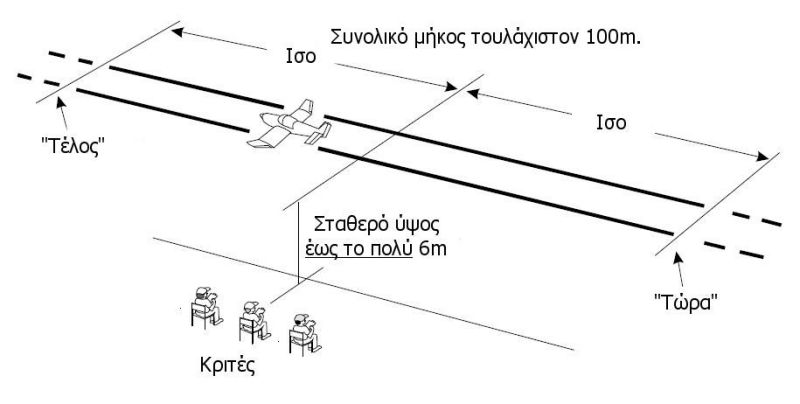
Errors:
1. Not a straight course (slight corrections acceptable with light aircraft).
2. Not constant height.
3. Not 6 metres or below.
4. Not pass over the landing area.
5. Not centred on judges’ position.
6. Not parallel with the judges’ line.
7. Too short distance (too long is not an error).
8. Model aircraft flight path not steady.
9. Too far away/too close/too high/too low.
ÅëðΓ�æù ΓΓ΅ ìçà ðáñåîçãçèþ, Γ�ñéôΓ�Γ² F3A Γ�Γ·ΓΉ Γ�Γ�Γåé, ΓΌΓ·Γ© scale.

 Aeromodelling GR
 E-mail
 310.037 μηνύματα σε 12.401 θέματα από 6.301 Μέλη / Τελευταίο μέλος: Clubdim


 Γ�åñéå÷üìåΓΓ΅
 Μέλη
 Σύνολο μελών: 6301
 Στατιστικά
 Συνδεδεμένοι χρήστες


 Αρχική
 Forum
 Album
 Βοήθεια
 Αναζήτηση
 Ημερολόγιο
 Σύνδεση
 Εγγραφή


